
ABOUT RACHEL
I’m learning that it’s okay to be messy sometimes.
We’re not meant to be perfect.
A registered associate therapist who is still becoming — and honest about it.
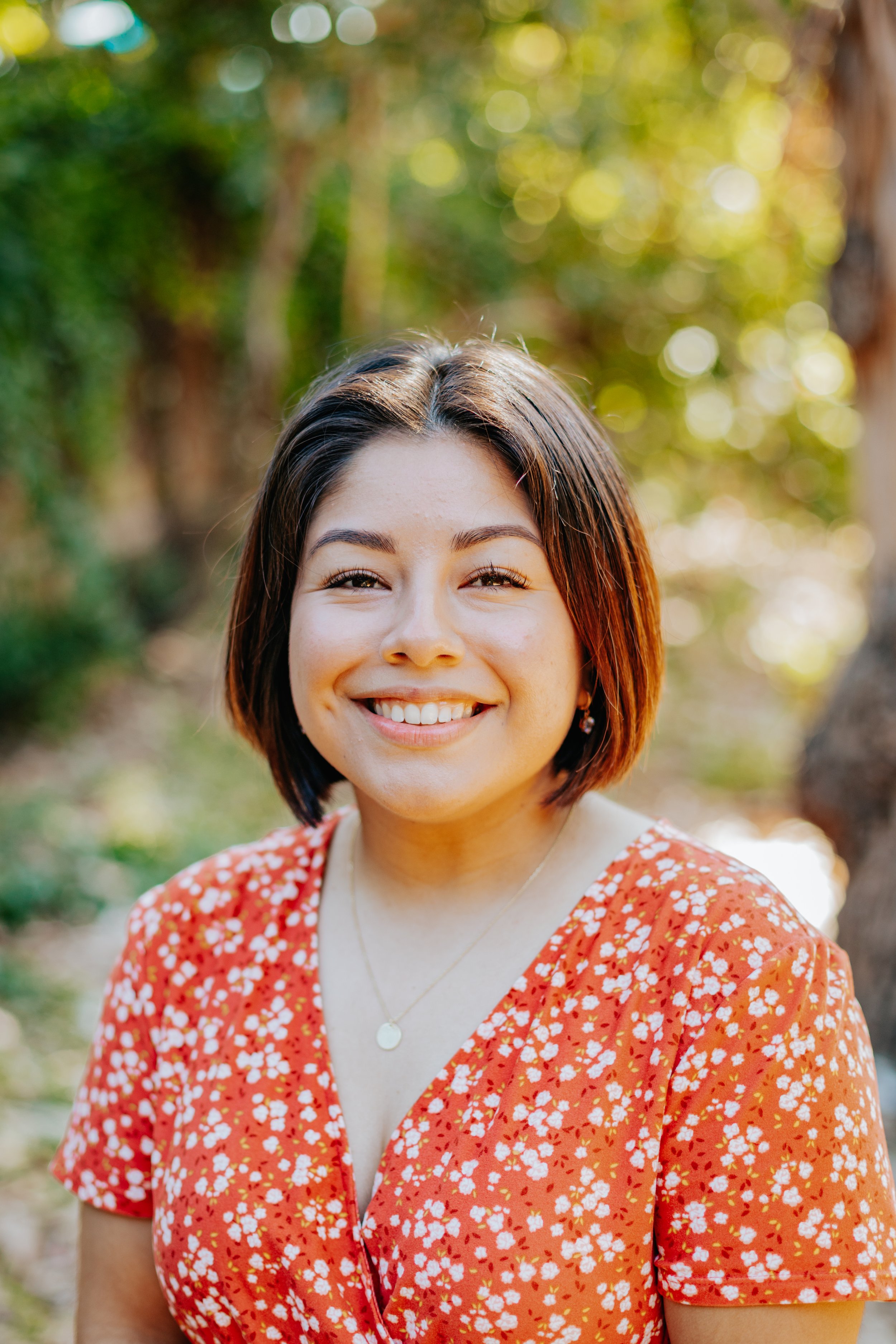
Rachel Diaz Rivas
Registered Associate Marriage and Family Therapist
AMFT #141509
M.S. Counseling
California State University, East Bay
Supervised by Yvette Kumar, LMFT #91273
Virtual Sessions · California
(925) 338-1755
HOW I FOUND MY WAY HERE
I was always the person asking why.
Growing up I was endlessly curious about what brought people to their work. I'd ask my professors, advisors, anyone willing to talk — not just what they did, but why. What was their moment? I was always searching for mine.
For a long time I thought I wanted to be a lawyer. I was drawn to victim witness advocacy — to the idea of sitting with people navigating the criminal justice system, being part of the support that was missing. I even volunteered briefly with a victim witness program in my county and found it meaningful in ways I couldn't fully articulate yet.
Then I sat in on a school counseling class at CSU East Bay and something clicked. I started connecting with the school counselor leadership association, getting my feet wet, learning what it actually meant to be present with young people in a real and sustained way.
But the moment I really knew was during a college advising volunteer program in high school. I was a college student myself, sitting across from teenagers I'd never met, helping them figure out their next steps. It was terrifying at first — just me and another person and the weight of everything they hadn’t said out loud yet.
My supervisor told me that one of the students I worked with would never have applied to college had we not worked together. That landed in me in a way I haven’t forgotten.
I've wanted to be a lawyer, a teacher, a social worker, a victim witness advocate. I realize now that wasn't confusion — it was the same instinct finding different doors. I've always wanted to make connections. To sit with people and actually be present with them. To be part of the support systems that are missing.
I'm currently working as a Registered Associate Marriage and Family Therapist under the supervision of Yvette Kumar, LMFT #91273, while I complete my hours toward licensure. I also continue to work as a high school counselor — because those students still need someone who shows up for them every day, and I'm not ready to stop being that person.

WHY COLIBRÍ RISING?
Small. Fast. Extraordinary if you slow down enough to notice.
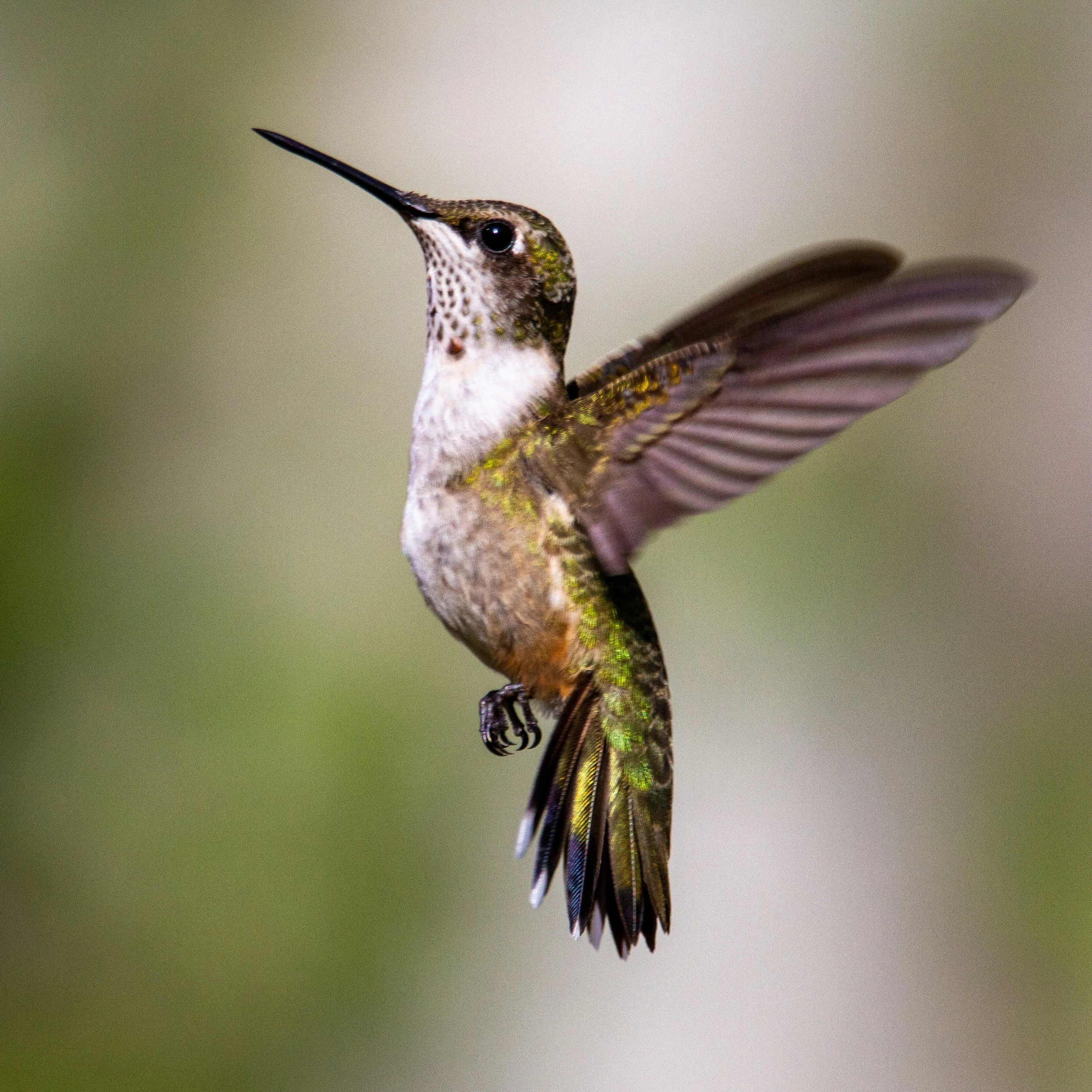
The colibrí has always meant something personal to me — not just for its beauty, but for what it represents. Hummingbirds can't stop. They have to keep moving to survive. And I think a lot of us know that feeling — of going a mile a minute, of life not giving us a chance to slow down, of moving through time before we even realize it's passing.
That's the juxtaposition that drew me in. Something so small, moving so fast, rarely stopping. And yet — if you slow down long enough to notice one, the detail is extraordinary. The iridescence. The precision. The way it shows up fully, even for just a moment.
I've felt small too. As a small woman, it's easy to connect to something that gets overlooked — that people miss if they blink. But small doesn't mean insignificant. The colibrí taught me that.
Rising is about becoming. Not arriving, not being fixed. Just moving toward more of who you already are. That’s what I hope this space offers.
WHERE I COME FROM
Culture isn’t something you put in a box.
It moves with you.
My family came to support my mom in raising me, and we all lived together under one roof — my grandparents, my sister, my uncles. That closeness is all I've ever known. It wasn't always easy, but it was familiar. And there's something profound about the difference between those two things.
I lost my grandmother in 2018 and my grandfather last year. They couldn't have been more different. My grandfather was joyful and present and giving — he never thought twice about helping someone, never seemed to need a reason. He found joy in life even when life was hard. My grandmother was quieter. A wallflower in the best sense — her presence was steady and stable, always there even when she wasn't the loudest voice in the room. Losing them has taught me that people leave their mark in different ways. And that both kinds of presence matter.
I'm also part Peruvian — through my father, who I don't really know. That part of myself exists but feels unreachable. I've spent a lot of my life navigating that kind of not-knowing — of being bicultural while only having access to one side, of navigating an identity that is real but incomplete.
I've gone by three names in my life. Rachel, Raquel, and Kelly. Raquel was for my family, the version of me they knew and held. Kelly came from Raquel, something my sister used that stuck, a name that lived in that private world but always needed an explanation outside of it. Rachel came later, in college, in my professional life. It felt like a stranger's name for a long time. It gets complicated when people from different parts of your life meet each other and reach for different names — that feeling of your worlds colliding in something as intimate as what you're called is something I understand deeply. But they're all me. And that's exactly the kind of complexity I want to make room for in this work, because people are never just one thing. Not one story, not one version, not one name.
Culture isn't heritage wrapped up and set aside. It's alive — constantly evolving around tradition, around your sense of self, around who you are when you move in and out of different spaces. I was told for most of my life that I was too much. Too loud, too feeling, too unwilling to settle down and be quiet.
I'm still unlearning that. And I don't want my clients to spend their lives unlearning it alone.
ON IDENTITY AND BELONGING
Not knowing where you fit is real.
I've created personas throughout my life to meet what different situations required — family, school, work, relationships. Surface-level versions of myself that kept me safe but kept me at a distance from who I actually am.
The relationship with myself is something I'm currently learning to build. I say that not to alarm you, but because I think it's important you know your therapist isn't standing on finished ground.
There's a lot of push and pull in figuring out how you fit in the world. In not fully belonging to either side of who you are. In loving people who shaped you in ways that were both beautiful and hard.
If any of that sounds familiar — you're in the right place.
THE PEOPLE WHO SHAPED ME
My sister gave me complete acceptance.
My sister is ten years older than me. She was never supposed to be my caretaker — she was supposed to just be my sister. But she showed up for me in ways that went far beyond what should have been asked of her, and she did it with her whole heart.
She accepted me fully. Not the version of me that was easy or quiet or put together. All of me. And I know she sacrificed parts of herself along the way to do that. I don’t take that lightly.
We're learning to be adults together now — two women navigating who we are to each other outside of the roles we grew up in. It's one of the most meaningful and complicated relationships of my life.
She taught me what it feels like to truly matter to someone. That's what I try to offer in this work.
ON GRIEF AND ANIMALS
Aries is 15. He is teaching me things I didn’t expect.
Aries has been with me through more of my life than most people have. He's older now and slowing down, and I'd be lying if I said I wasn't scared.
Loving him through this has taught me something about grief that I couldn't have learned any other way. Grief doesn't always announce itself. Sometimes it arrives quietly, in the middle of an ordinary Tuesday, when you notice your dog is moving a little slower than he used to.
I don't think that's something to fix or rush through. I think that's something to be present with. Aries is teaching me how — and it's made me a more honest, more patient, more human therapist.
HOW I WORK
Honest, present,
and figuring it out with you.
I'm going to be real with you about how I work, because I think you deserve that more than a polished description. My mind goes a million directions at once. I'm learning to use that as a strength rather than fight it — to let you actually see how I'm understanding you, rather than presenting a curated response.
I feel strongest when I stop trying so hard. When I'm not inside my own head scrambling for the right answer — when I forget about everything else and just hyperfocus on what's in front of me. That's when something real happens. That's presence, and it's what I'm always working toward.
When I catch myself rushing ahead of you, I stop and say: there are so many places I want to go with you — but where do you want to go right now?
I've learned to take more pauses. To say out loud "let me sit with that for a moment." To resist finishing your sentences even when I think I know where they're going — because I don't. Not really. And the moment I think I do is exactly when I need to slow down.
I'm a visual learner and a curious person. I might share how I'm picturing what you're describing. I might go somewhere unexpected and then find my way back. I'll be transparent when I do — because I'd rather you see how I'm thinking than wonder what's happening behind my eyes.
Person Centered
You are the expert on your own life. I'm not here to hand you answers. I'm here to create enough safety that you can start to hear yourself more clearly.
Solution-Focused
You already have more capacity than you realize. We look at what's working and build from there — rather than only cataloging what's hard.
Gestalt
What's in your body matters as much as what's in your head. We pay attention to the whole of you — not just the words but how you're saying them.
Still learning…
I don't have all the answers. Sometimes that feels terrifying to admit. But I'd rather be honest with you about that than perform a confidence I don't have. I think that honesty makes me better at this work, not worse.
WHAT I BELIEVE
Young people are saying plenty.
We’re just not always connecting.
I've sat with hundreds of students who were weighed down by more than anyone around them noticed. Not because they weren't expressing it — but because the adults in their lives hadn't yet learned the language to hear it.
Turning 18 doesn't mean having it figured out. The need for real support doesn't stop — if anything, that's often when it becomes most invisible. You're expected to be an adult before anyone has taught you what that means.
I'm also deeply committed to understanding the systems around us — the ones that shape who gets care and who doesn't, whose pain is taken seriously and whose is dismissed. That passion for justice lives in everything I do. I may not always have the words or the data, but I feel it in my core. People deserve care. All people.
Both your experience and theirs can be true at the same time. That's not a compromise. That's the whole point.
If any of this sounds like what you’ve been looking for…
You don’t need the perfect words. You don’t need to know exactly what you need. Just reach out and we’ll figure out the rest together.